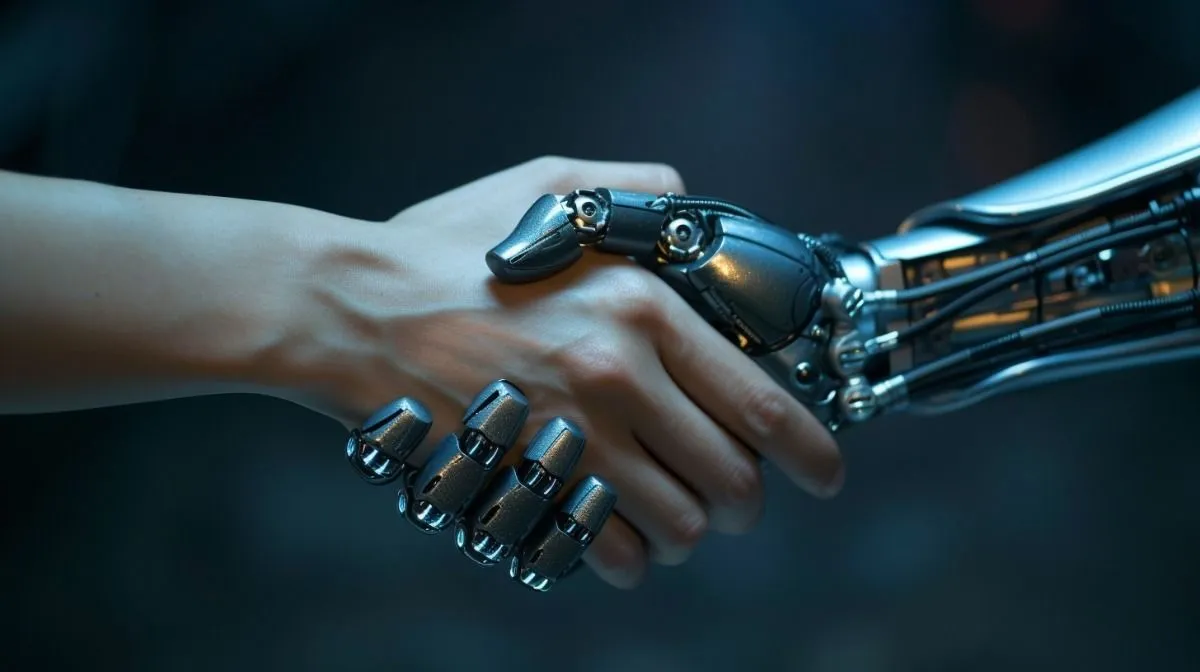
Exploring how the 70/30 model of AI automation and human intelligence is reshaping the software industry and creating unprecedented opportunities for innovation and efficiency.
The Evolution of Software Development
Software development has undergone dramatic transformations over the past few decades. From punch cards to high-level programming languages, from waterfall to agile methodologies, each evolution has promised to make development faster, more efficient, and more accessible. Today, we stand at the threshold of perhaps the most significant transformation yet: the integration of artificial intelligence into the development process itself.
At Vimix Technologies, we've pioneered a unique approach that combines the power of AI automation with the irreplaceable value of human expertise. Our 70/30 model—where 70% of development is powered by AI and 30% is driven by human intelligence—represents a paradigm shift in how software is conceptualized, built, and delivered.
Why AI Alone Isn't Enough
While AI has made remarkable strides in automating repetitive tasks, generating code, and even identifying bugs, it cannot replace the creative problem-solving, strategic thinking, and contextual understanding that human developers bring to the table. AI excels at pattern recognition and optimization, but humans excel at innovation and adaptation.
The most effective approach isn't to choose between AI and human developers—it's to combine their strengths. AI can handle the heavy lifting of code generation, testing automation, deployment pipelines, and routine maintenance. Meanwhile, human developers focus on architecture design, business logic, user experience optimization, and solving complex, unique challenges that require creative thinking.
The 70/30 Model in Practice
In our 70/30 model, AI systems handle tasks like automated code generation based on specifications, continuous integration and deployment, automated testing and quality assurance, performance monitoring and optimization, and security scanning and compliance checks. This automation dramatically reduces development time and minimizes human error in routine tasks.
The human 30% focuses on critical activities where human judgment is irreplaceable: understanding client requirements and business context, making architectural and design decisions, reviewing and optimizing AI-generated code, handling edge cases and complex problem-solving, and ensuring the solution aligns with strategic business goals. This division of labor maximizes efficiency while maintaining the quality and strategic alignment that clients expect.
Real-World Impact
The results of this approach are impressive. We've achieved 60% reduction in project delivery time, 10× productivity increase compared to traditional development models, 100% deployment accuracy through automated processes, and consistent quality across diverse industry domains. These aren't just numbers—they translate to real value for our clients.
Companies can launch products faster, respond to market changes more quickly, and iterate based on user feedback without the traditional bottlenecks of manual development. The cost savings are significant, but more importantly, the strategic agility this approach provides is invaluable in today's fast-paced business environment.
The Future is Collaborative
As AI continues to evolve, the boundary between what machines and humans do best will continue to shift. However, we believe the future isn't about AI replacing developers—it's about AI empowering developers to do more, better, faster. The developers of tomorrow will be those who can effectively orchestrate AI tools while bringing their unique human capabilities to bear on the problems that matter most.
At Vimix Technologies, we're not just adapting to this future—we're actively building it. Our commitment to the 70/30 model reflects our belief that the best software comes from the best of both worlds: the speed and consistency of AI, combined with the creativity and strategic insight of human expertise.