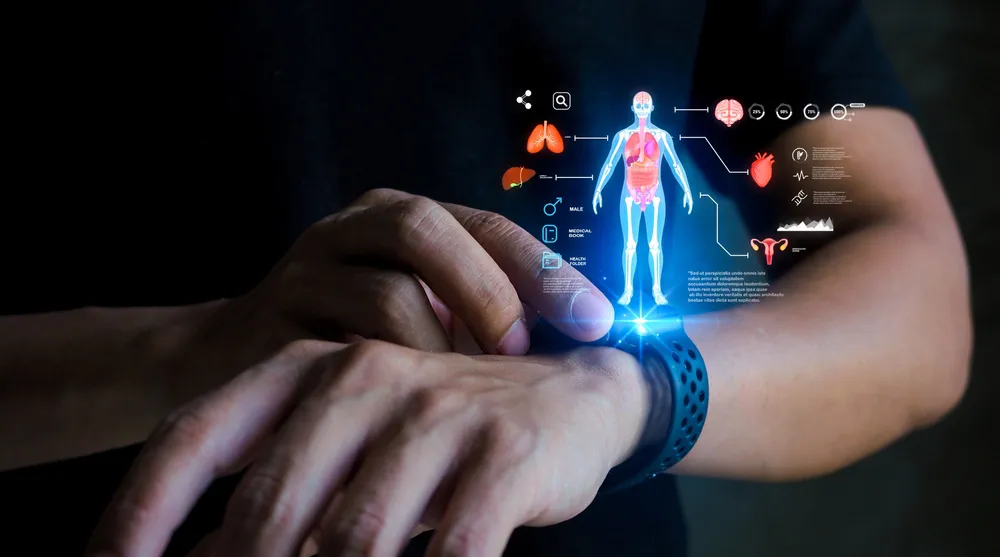
Wearable devices can enhance patient care, improve diagnostic accuracy, and streamline healthcare operations. However, securing these devices and protecting sensitive health data presents significant challenges. At Vimix Technologies, we can help healthcare organizations build secure, intelligent wearable solutions that protect patient data while delivering transformative healthcare outcomes.
The Promise and Challenge of Wearable Healthcare Devices
Wearable healthcare devices represent one of the most transformative technologies in modern medicine. From fitness trackers monitoring heart rate to smartwatches detecting arrhythmias, from continuous glucose monitors for diabetes management to advanced biosensors tracking vital signs—these devices provide unprecedented insights into patient health in real-time.
The benefits are substantial: enhanced patient care through continuous monitoring, improved diagnostic accuracy with rich data streams, streamlined healthcare operations with automated data collection, and proactive health management enabling early intervention. However, these devices also handle extremely sensitive personal health information, making them attractive targets for cyberattacks and raising critical security and privacy concerns.
Security Challenges in Wearable Healthcare Devices
Wearable healthcare devices face unique security challenges that traditional enterprise systems don't encounter. These devices operate with limited computational resources, constrained battery life, and must transmit data wirelessly—often over Bluetooth, Wi-Fi, or cellular networks. Each of these characteristics introduces potential security vulnerabilities.
We can help address critical security concerns including device authentication and access control to prevent unauthorized access, data encryption both at rest and in transit to protect sensitive health information, secure communication protocols to prevent data interception, firmware security to prevent device tampering, and privacy protection to ensure patient data confidentiality while maintaining utility for healthcare providers.
How Vimix Can Implement AI and TinyML for Enhanced Security
At Vimix Technologies, we can leverage Artificial Intelligence and TinyML (Machine Learning on microcontrollers) to transform wearable healthcare devices into intelligent, self-sufficient tools that provide all necessary information while keeping data secure. Our expertise in AI and edge computing enables us to implement on-device intelligence that enhances both security and functionality.
We can implement AI-powered anomaly detection that runs directly on the device, identifying unusual patterns that might indicate a security breach or health emergency without transmitting raw data. We can develop intelligent data filtering algorithms that process sensitive information locally, sending only aggregated insights to cloud systems while keeping detailed patient data on the device. We can build adaptive authentication systems that use behavioral biometrics—learning patterns of normal device usage to detect unauthorized access attempts. We can create intelligent encryption systems that adapt security levels based on data sensitivity and context. We can develop federated learning models that enable devices to learn from data patterns without exposing individual patient information.
Data Privacy and Compliance Solutions
Healthcare data is among the most sensitive personal information, and wearable devices must comply with stringent regulations including HIPAA in the United States, GDPR in Europe, and various national healthcare data protection laws. At Vimix, we can help organizations implement comprehensive privacy protection mechanisms that ensure regulatory compliance while maintaining device functionality.
We can design privacy-preserving architectures that minimize data collection to only what's necessary for medical purposes. We can implement data anonymization and pseudonymization techniques that protect patient identity while enabling valuable medical research and analytics. We can build consent management systems that give patients granular control over how their data is used and shared. We can develop audit logging and monitoring systems that track all data access and modifications for compliance reporting. We can create secure data sharing protocols that enable healthcare providers to access necessary information while maintaining patient privacy boundaries.
Technology Stack and Implementation
Our expertise spans the complete technology stack required for secure wearable healthcare devices. We can work with embedded systems and microcontrollers optimized for low power consumption, implementing secure firmware development practices. We can leverage TinyML frameworks like TensorFlow Lite for Microcontrollers and Edge Impulse to run machine learning models directly on devices with minimal computational overhead.
We can integrate secure communication protocols including BLE (Bluetooth Low Energy) with advanced encryption, Wi-Fi 6 with WPA3 security, and cellular connectivity with end-to-end encryption. We can build secure cloud backends using HIPAA-compliant cloud infrastructure, implementing robust API security, and maintaining secure data storage. We can develop mobile applications that securely interface with wearable devices, implementing strong authentication and encrypted data transmission. We can create comprehensive security monitoring systems that track device health, detect anomalies, and provide real-time threat intelligence.
End-to-End Security Architecture
Security in wearable healthcare devices cannot be an afterthought—it must be built into every layer of the system architecture. At Vimix, we can help design and implement end-to-end security architectures that protect data throughout its entire lifecycle: from sensor capture on the device, through wireless transmission, cloud storage, and healthcare provider access.
We can implement device-level security including secure boot processes that verify firmware integrity, hardware security modules for cryptographic operations, and tamper detection mechanisms. We can design secure communication channels with mutual authentication, encrypted data transmission, and protection against man-in-the-middle attacks. We can build secure cloud infrastructure with HIPAA-compliant data centers, encrypted databases, and role-based access control. We can create secure application interfaces with OAuth 2.0 authentication, API rate limiting, and comprehensive audit trails. We can develop incident response systems that quickly detect and mitigate security threats.
Building Trust Through Security
For wearable healthcare devices to fulfill their transformative potential, patients and healthcare providers must trust that their data is secure. At Vimix Technologies, we understand that security isn't just a technical requirement—it's a foundation of trust. By implementing comprehensive security measures, advanced AI capabilities, and privacy-preserving technologies, we can help organizations build wearable solutions that patients and healthcare providers can confidently adopt.
Our approach combines cutting-edge technology with deep understanding of healthcare requirements and regulatory compliance. We can transform wearable devices into intelligent, secure tools that enhance patient care while protecting sensitive health information. As TinyML and AI continue to evolve, we can help healthcare organizations stay at the forefront of secure, intelligent wearable technology—delivering solutions that provide all necessary information while keeping data secure, and ultimately transforming these devices into intelligent, self-sufficient tools that revolutionize healthcare delivery.